May 31, 2009

League of Women Voters to Support Voter ID?

One has to assume the answer is yes. After all, League spokesman Gloria Caldwell said last month that "if there were any evidence of voter impersonation in Oklahoma elections, the League of Women Voters would be first in line supporting this kind of [voter ID] legislation, but proponents cannot identify one single case."

Now that the Tulsa World has found that as many as 429 dead Oklahomans are still registered to vote, and that as many as 10 have voted postmortem since 2004, surely a League press release is imminent.

May 30, 2009

Great Lede

Love the lede in this front-page Wall Street Journal story today by Phred Dvorak:
Like most San Franciscans, Charles Pitts is wired. Mr. Pitts, who is 37 years old, has accounts on Facebook, MySpace and Twitter. He runs an Internet forum on Yahoo, reads news online and keeps in touch with friends via email. The tough part is managing this digital lifestyle from his residence under a highway bridge.

May 29, 2009

Catty Girls Pushing Some Parents to Homeschool

The number of homeschoolers has nearly doubled in a decade, the nation's largest newspaper reports today on its front page.
What else has nearly doubled? The percentage of girls who are home-schooled. They now outnumber home-schooled boys by a wide margin. ... In 1999, it was 49% boys, 51% girls. Now boys account for only 42%; 58% are girls.

That may well be a result of parents who are fed up with mean-girl behavior in schools, says Henry Cate, who along with his wife home-schools their three daughters in Santa Clara, Calif. "It's just pushing some parents over the edge," says Cate, who writes the blog Why Homeschool. ...

Michelle Blimes home-schools her three daughters in Orem, Utah. Initially it was for academics, and now she sees social benefits. "They should be able to enjoy playing and being kids before being thrown into the teen culture," Blimes says.

May 26, 2009

When I Want Your Opinion I'll Give It to You

The June issue of Smithsonian magazine arrived in the mailbox the other day, and it features an article by Arthur Lubow entitled "The Triumph of Frank Lloyd Wright." I love this anecdote:
Wright said that his architecture always aimed to serve the client's needs. ... Toward the end of his life, he constructed his second and last skyscraper, the 19-story H. C. Price Company Office Tower (1952-56) in Bartlesville, Oklahoma. After it was completed, Wright appeared with his client at a convocation in town. "A person in the audience asked the question, 'What's your first prerequisite?'" archivist Pfeiffer recalled. "Mr. Wright said, 'Well, to fulfill a client's wishes.' To which Price said, 'I wanted a three-story building.' Mr. Wright said, 'You didn't know what you wanted.'"

May 25, 2009

Weekend Pics


Besides swimming, fishing, playing basketball, and zooming around on a four-wheeler this weekend, we also went to Kiddie Park, which happens to be featured in the current issue of American Profile magazine.

May 21, 2009

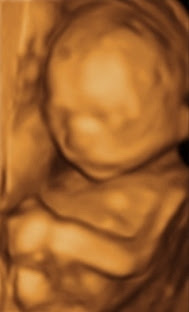
'Hey You with the Pretty Face, Welcome to the Human Race'

Nothing like some lyrics from ELO's "Mr. Blue Sky" to getcha goin' in the morning. Pretty good photo of a little girl who's only 18 weeks along and half a pound.

May 18, 2009

Great Moments in Takings

OK, so it's not exactly a courthouse or a military base. But I think you'll agree the government clearly was justified in taking private property for this "public use."

Beware Those Unintended Consequences

Writing 12 years ago in The New Democrat, Tom Mirga, a former news editor at Education Week, observed that "if a public institution cannot be reformed in 15 years for $100 billion, it is fair to conclude that it cannot be reformed at all. ... If the education establishment continues to defend pumping more money into an indefensible system, it will surely lose the voucher battle and thus ensure the demise of public education."

In a somewhat similar vein, today in The Oklahoman I suggest that the OEA's latest money grab would be bad for the state but (ironically enough) could be good for the prospects of school choice.

May 15, 2009

Is Voter Fraud Really That Implausible?

Our friends on the left like to argue that a voter ID law is unnecessary in Oklahoma because there's no evidence of voter fraud here. Governor Brad Henry vetoed a popular voter ID bill last month.

Does anyone else remember former-Governor George Nigh's quip that when he dies he wants to be buried in McAlester "so I can keep on voting." That's humorous only because there's an element of truth in it. And now that dead people are getting stimulus checks from the man Gov. Henry endorsed for president, I think I'd feel better if we went ahead and put a voter ID law in place. Fortunately, we'll get to go to the polls next year and do just that.

Not to Worry, Obama Will Be There Shortly

For Bailout Transparency

A coalition of organizations is calling on Congress to increase accountability in the TARP program. I was pleased to sign on to a letter, delivered today to members of Congress, urging greater disclosure of who received TARP funding, as well as relevant documentation of transactions via a searchable database.

May 13, 2009

Are Southern Baptists Starting to Get Serious About Christian Education?

Morris H. Chapman is the president and chief executive officer of the Southern Baptist Convention Executive Committee and one of the most influential leaders in the SBC. In a very important new article, Dr. Chapman proposes that perhaps "our focus in the evangelical community should shift at least in part from training our children during the transition to adulthood to placing greater emphasis on training up a child in the way he should go." Some highlights:
I'm not advocating the neglect of what we have already established in higher education, but simply a course correction in an area that seems to have suffered neglect -- the protection and nurturing of the spiritual health and growth of children and adolescents. In far too many public schools throughout the country our children are being bombarded with secular reasoning, situational ethics and moral erosion. ...

Do not misunderstand; I believe the primary responsibility for raising children is charged to parents. However, it is undeniable that the church is charged with training parents and working with them to ensure tender shoots survive when moved from the greenhouse to the harshness of the natural environment.

To be sure, there are a number of areas where Kingdom education at this level would be a welcome alternative to public schools. Many of our inner cities are suffering from failed families and failing students. In Baltimore, Md., for example, schools are experiencing dropout rates up to 60 percent; 70 percent of teens are sexually active; and, the city has alarming rates for crimes, sexually transmitted diseases and out-of-wedlock births.

In such areas, Kingdom schools would serve as a central ministry among a myriad of ministries that would help families recover from the chaos that now exists and help them establish Christ in the home. ...

The focus should not be to abandon public schools, but to be certain not to abandon our biblical responsibility to come alongside parents in training up a child in the way he should go. Can we ignore the enormity of this need any longer when our children so desperately need to be fortified with strong biblical precepts as well as history, grammar, literature, civics, math and science? In recent days, two questions have weighed heavily on my soul. If Southern Baptists don't do it, who will? If we don't do it now, do we risk forever losing the opportunity to build schools for God's glory and the future of our children, grandchildren and the land we love?
Crossposted at Choice Remarks

May 12, 2009

A Party and a Movement Are Not the Same Thing

Noemie Emery, a contributing editor to The Weekly Standard, writes in the May 11 issue ('Specter of Change') about the "passion for coalition-destruction" now seen on the right:
What lies behind this is (a) the feeling that oneself and one's friends make up a majority; and (b) a failure to realize that a party and movement are not the same thing. A movement exists to express and promote a coherent set of principles in the world of ideas and of values. A party -- especially in a two-party system -- is something quite different: a gathering of diverse political forces around a large and loosely held set of interests and values, that exists to give all of its factions access to power in the practical world of events. A movement gives a party a spine and a platform; the party assembles a coalition around them that is large enough to win and hold power, and turn some of the movement's ideas into law.

The conservative movement is a collection of theorists that self-selects for conformity. The Republican party is the vehicle for the center-right of the American polity, a group that includes the conservative movement, but is not quite of it, and includes many people who touch the conservative movement with different degrees of intensity, or only lightly, or on only a limited number of points.

Permutations are endless: Rudy Giuliani, right on defense, crime, and tax-cutting, but wrong (in the movement's view) on gays and abortion; George W. Bush, a hawk, tax-cutter, and social conservative, but a bleeding heart and big spender; John McCain, a strong defense and fiscal conservative, but a maverick on many things else. All are considered as grave disappointments by the purists of the conservative movement, who also give failing grades to every Republican president since Coolidge, with the exception of Reagan, and sometimes even to him. The movement seems in a permanent funk over the party's unworthy leaders and often looks down on the party itself as being a drag on the movement's aspirations and prospects. The only problem is that the movement, if it is to be anything more than a really interesting reading group, needs the party if it wants to succeed.

The numbers say everything: Over recent decades, about a third of the population has self-described as conservative; just under half as moderate; while liberals come in at a little over one-fifth. This shows the strength of the conservative movement, in that it outpolls the liberals and, when combined with the large number of right-leaning moderates, can frequently reach a majority. But it also reveals its critical weakness: It is unable to push its own numbers beyond this one-third. This failure is the source of constant frustration to the movement, because it has to bargain with people it thinks "unreliable," who may stand with it on one set of issues and wander away on the next.

This is true of McCain, of Lindsey Graham, even more of the ladies from Maine, and of no one more than their former colleague Arlen Specter, who is with them on card check but against them on the stimulus package; against them on the nomination of Robert Bork to the Supreme Court in 1987, but with them as a stalwart on the equally contentious matter of Clarence Thomas. The problem for conservatives is that in the states that these senators come from, on-and-off backing is all they are likely to get. They can rail at the "unreliables" as RINOs (Republicans in Name Only), but this is a misnomer, as the Republicans are not in fact the conservative party. They are the party of the center-right, including those who are about one-eighth of an inch to the right of the center. ...

What can conservatives do, if they want to extend their dominion? They might stop holding up Ronald Reagan as a shield and an icon and look instead at what Reagan did. He was a movement conservative and a movement leader, but he was also a politician, and a builder of party, who understood how a movement fit into a party, and how a party could move a movement ahead. Coalition destruction was not on his agenda. "He set out to run as the candidate of party unity, reaching out to Republican moderates, especially in the Northeast," as his biographer Steven F. Hayward has written. ...

Reagan would have seen Sarah Palin as an asset and not an embarrassment. He did not consider the party an embarrassment either, but the only mechanism through which the ideals of movement could ever be implemented. "The biggest single grouping of conservatives is to be found in that party. It makes more sense to build on that grouping than to break it up and start over," he said to those who suggested that option. "Conservatism is not a narrow ideology, nor is it the exclusive property of conservative activists," he said to an audience of exactly those activists.

May 11, 2009

Obama Helps White Men Get Rich Killing Black Children

Joseph Sobran, writing in the June issue of Chronicles magazine:
In order to become president, [Obama] had to get the Democratic nomination. And in order to do that, he had to appease the party's feminists by supporting abortion all the way. And in order to do that, he had to ignore the actual demographics of abortion.

People on both sides talk abstractly, as if abortion were only a matter of the individual woman's isolated "choice." Yet this avoids some striking social disparities. Women who get abortions in this country are disproportionately black and Hispanic. The abortionists are overwhelmingly white and male.

So, concretely, abortion actually means white men getting rich killing black and brown children. And Obama's promotion of this hideous practice casts a strange light on him as a symbol of racial "progress."

May 07, 2009

Lockdown!

The inimitable John Taylor Gatto taught for 30 years in public schools. He was thrice named New York City Teacher of the Year, and also earned New York State Teacher of the Year honors.

Gatto once wrote an essay called "Some Reflections on the Equivalencies Between Forced Schooling and Prison." I know, I know, it's overreaching to compare public schools -- oftentimes unsafe places (replete with with metal detectors and security guards) which are sometimes put on lockdown -- to prisons. But still. I couldn't help but think of Mr. Gatto's essay this morning when I read a story in The Oklahoman headlined "Edmond district ramps up security at school." Jesse Olivarez reports:
Earlier this month, district officials finished installing new security features at [Clegern Elementary School]. Features include a new camera surveillance system and new pass keys to gain entrance to the school at 601 S Jackson.

Bill Powell, the school's principal, said the system has taken some getting used to, but it has made his school safer. "This is a very, very secure school now," he said.

The new camera system gives school officials a panoramic view of the school with 36 cameras mounted at key points outside the building, giving administrators a view of everything happening on campus. ...

After classes start, all doors to the school automatically lock. People inside can walk out, but the doors will remain shut to those without a pass key. Visitors must now identify themselves and wait to be buzzed in before they can access the school.
The photo accompanying the story is priceless. The warden principal at this elementary school has a smile on his face ("Ain't this dandy?") as he demonstrates the boffo new security system.

Interestingly, in his latest book, Weapons of Mass Instruction: A Schoolteacher's Journey through the Dark World of Compulsory Schooling, Gatto shares a little tidbit about the father of America's current public school system:
Horace Mann himself called school "the best jail" to his financial backers, by which he meant that the jail you sentence your mind to when you go to school is harder to escape than any iron bars.
-- Crossposted at Choice Remarks

Happy Mother's Day, Susie ...

... and congratulations!

Transparency for the Fed

In an open letter which appeared today on page A5 of The Washington Times, I (on behalf of OCPA) joined with several other organizations in urging Congress to bring some transparency to the Fed. Here's an excerpt:
Since its inception, the Federal Reserve has operated without sufficient transparency or accountability to the American people. In fact, current law specifically excludes the Fed from a thorough audit or real congressional oversight. No government agency has such an utter lack of sunshine.

The Federal Reserve has created and dispersed trillions of dollars in response to our current financial crisis. Americans across the nation, regardless of their opinion on the bailouts, want to know where that money has gone and exactly how much has been spent.

May 06, 2009

Why School Choice Is Important

Some Oklahoma schoolteachers believe economic freedom is "what's wrong with this country." In the current issue of Urban Tulsa Weekly, I beg to differ.

May 03, 2009

Pioneer Woman

The Tulsa World profiles my favorite homeschooler in the entire Osage.

The Bird Has Flown

It's the end of the line for Pontiac, which is sad news for the owner of the Pontiac-Buick dealership in Bartlesville. "It's a wonderful car company with a lot of heritage and I'm disappointed to see that come to an end," says third-generation car dealer David Oakley, Jr. "We've sure sold a lot of Pontiacs over the years."

Yes they have. Including this red Firebird, more than (gulp) a quarter-century ago.

"It will be sad to think that you won't ever be able to get a GTO or Firebird kind of car with the Pontiac emblem on it," Oakley says. I tend to agree.

May 02, 2009

Persecuted Citizen Told Drew: No Deal

Indicted on trumped-up charges by Oklahoma's Aspiring Governor, Susan Johnson stood up to the man.